Is Watermelon Good for Workout Recovery? Science Says
Yes, it can help. Watermelon is rich in citrulline, which your body turns into arginine for blood flow. Master Phil Ross explains when to eat it and how much.
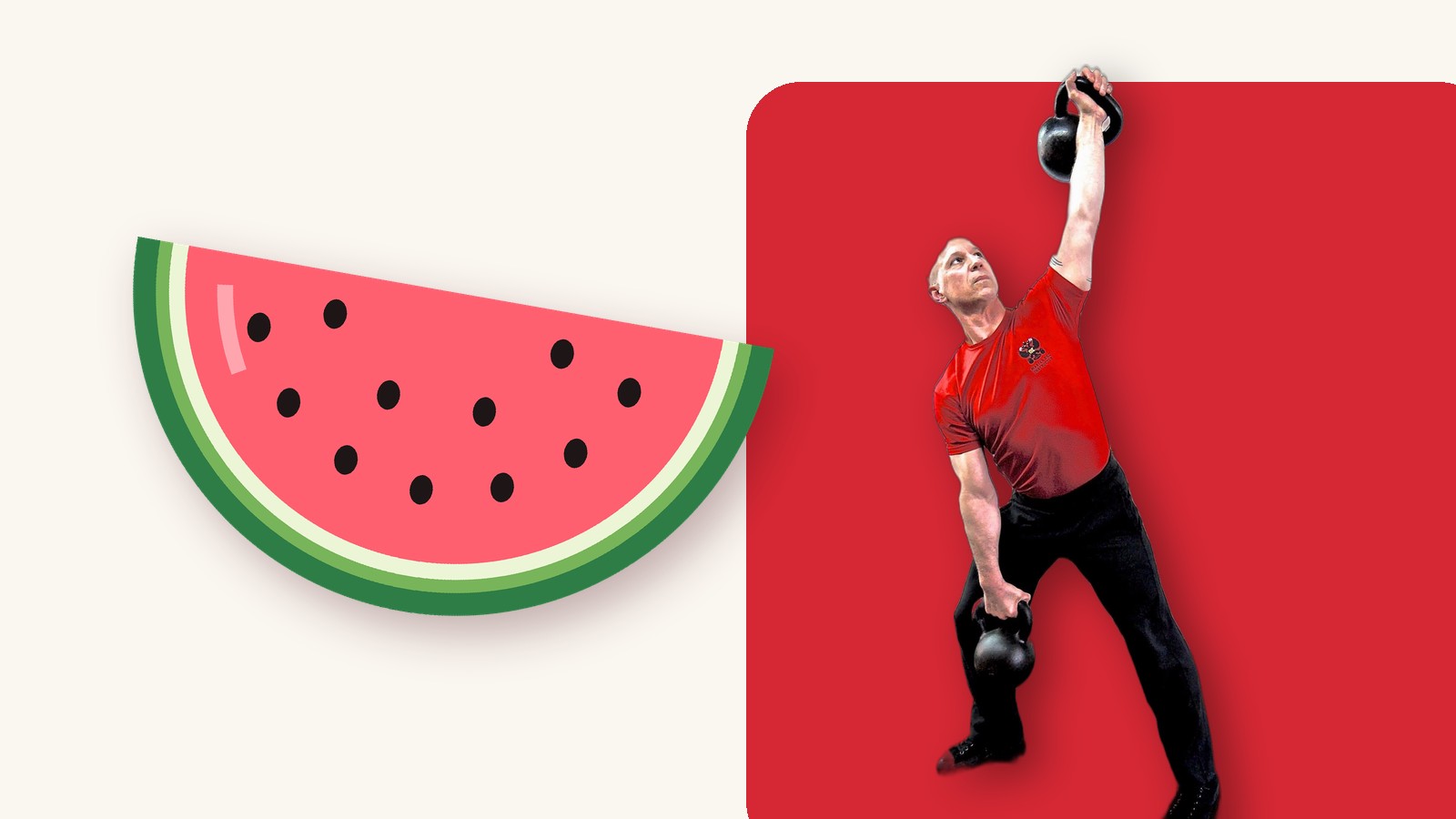
Yes. Watermelon is one of the best whole foods you can eat around your training. It is about 91% water, it is light on calories, and it is one of the richest natural sources of citrulline, an amino acid your body turns into arginine and then nitric oxide, which helps your blood vessels relax and deliver blood to working muscles. Small studies suggest it can also take the edge off next-day soreness.
I have used watermelon for myself and the athletes I train before, during, and after competitions for years. Honestly, I started because it tastes good and it works. Later I went looking for the science behind it, and here is what I found.
What is in watermelon that helps your workout?
Three things make it more than a summer snack:
- Water. Watermelon is roughly 91% water, so it helps you rehydrate along with the fluids you drink.
- Natural sugar. A small, fast hit of carbohydrate to top off energy before training or start refueling after.
- Citrulline. This is the big one. Your body converts citrulline into arginine, and arginine is the raw material for nitric oxide.
Why does that chain matter? Arginine helps your body make:
- Nitric oxide, which helps regulate blood vessel tone (how relaxed and open your vessels are) and supports your immune system.
- Proline, a key part of collagen, which your joints and healing tissue depend on.
- Creatine, a major energy-storing compound for your muscles and nerve cells.
Why not just take an arginine supplement?
You can, but much of it never makes it to where you want it. A large share of swallowed arginine is broken down in your intestines and liver before it reaches your bloodstream, and big doses (around 10 grams or more) can upset your stomach.
Citrulline takes a smarter route. It largely bypasses that breakdown, and your body converts it into arginine afterward. That is why researchers got interested in citrulline, and in watermelon as a natural source of it.
Does eating watermelon actually raise arginine?
Yes. In a study published in Nutrition, USDA researchers had 23 healthy adults, ages 36 to 69, drink watermelon juice every day for three weeks at a time. They tested a lower amount (780 g, about 3 cups) and a higher amount (1,560 g, about 6 cups), plus a no-watermelon control period (Collins et al., 2007).
The results:
- Arginine rose 12% on the lower amount.
- Arginine rose 22% and ornithine rose 18% on the higher amount.
In plain terms, the citrulline from a real food was being converted into arginine. That is the whole foods effect at work.
Does watermelon reduce muscle soreness?
The early research says it may. Two small studies from Spain are worth knowing:
- Cyclists in the lab. Seven athletes drank about 2 cups (500 mL) of natural watermelon juice before a hard cycling test. Compared with a placebo drink, their heart rate came down faster during recovery and they reported less muscle soreness the next day (Tarazona-Díaz et al., 2013).
- Half-marathon runners. Amateur runners drank 500 mL of watermelon juice enriched with extra citrulline 2 hours before a half marathon. Compared with placebo, they reported less muscle soreness from 24 to 72 hours after the race, had lower blood lactate right after, and kept their jump height instead of losing it (Martínez-Sánchez et al., 2017).
Keep this in perspective. These were small studies, and the half-marathon juice had extra citrulline added, more than you would get from a glass of plain juice. Watermelon is not a miracle recovery drug. It is a smart, simple food that stacks the odds a little more in your favor.
Should you eat watermelon before or after a workout?
Both work, for different reasons.
- Before (about 1 to 2 hours out): This is the timing the research used. You get the citrulline on board, plus water and a little quick energy.
- After: It helps you rehydrate and starts refueling. Pair it with a protein source (Greek yogurt, eggs, a protein shake) so your muscles get what they need to rebuild.
- During long sessions or tournaments: A few chilled slices between rounds or matches is exactly how I have used it with my athletes. It is easy on the stomach and it tastes like a reward.
How much watermelon should you eat?
The studies used about 2 to 6 cups of juice a day. For most people, 2 to 3 cups of watermelon (fruit or juice) on training days is a practical place to start.
Whole fruit or juice? The research used juice, and fresh, unpasteurized juice appears to deliver citrulline a little better than heated juice. Whole fruit gives you the same citrulline plus fiber and keeps you fuller. Blend it, slice it, or freeze it. Just keep it real fruit, not watermelon-flavored candy or sports drinks.
Is watermelon OK if you watch your blood sugar?
For most people, yes, in normal portions. Watermelon has a high glycemic index, but because it is mostly water, a typical serving carries a small total carbohydrate load. If you have diabetes, pair it with protein or fat, watch your portions, and talk with your doctor or dietitian. (I break down glycemic index vs. glycemic load in my post on the glycemic index after 50.)
The bottom line
Watermelon will not do your training for you. But it hydrates you, fuels you, and hands your body citrulline, the raw material for better blood flow, and the early science says it may help you bounce back faster.
One theme kept coming up in my nutrition studies: most, if not all, of your vitamins and minerals can be obtained through whole foods. Watermelon is a perfect example. Eat real food, train consistently, and recover on purpose.
If you want a simple plan to put that recovery to work, the Body Bell Method gives you kettlebell strength, mobility, and conditioning you can do at any age, coached step by step. Visit bodybellmethod.com to get started, and send this to the friend who always shows up to the cookout with a watermelon.
References
- Collins, J. K., Wu, G., Perkins-Veazie, P., Spears, K., Claypool, P. L., Baker, R. A., & Clevidence, B. A. (2007). Watermelon consumption increases plasma arginine concentrations in adults. Nutrition, 23(3), 261-266. https://doi.org/10.1016/j.nut.2007.01.005
- Martínez-Sánchez, A., Ramos-Campo, D. J., Fernández-Lobato, B., Rubio-Arias, J. A., Alacid, F., & Aguayo, E. (2017). Biochemical, physiological, and performance response of a functional watermelon juice enriched in L-citrulline during a half-marathon race. Food & Nutrition Research, 61(1), 1330098. https://doi.org/10.1080/16546628.2017.1330098
- Tarazona-Díaz, M. P., Alacid, F., Carrasco, M., Martínez, I., & Aguayo, E. (2013). Watermelon juice: Potential functional drink for sore muscle relief in athletes. Journal of Agricultural and Food Chemistry, 61(31), 7522-7528. https://doi.org/10.1021/jf400964r
- Examine.com. Citrulline: Research analysis. https://examine.com/supplements/citrulline/
- U.S. Department of Agriculture. FoodData Central: Watermelon, raw. https://fdc.nal.usda.gov/
Adapted from Phil Ross's graduate coursework in sports nutrition (2018), updated with current research for 2026.
More from the journal.

Get certified.
Teach kettlebell training, bodyweight exercises and dynamic tension with the BodyBell Method. The certification is approved for continuing education credits by NASM, ACE and AFAA.