Protecting Brain Function After 50: Why Concussion Awareness Belongs in Every Fitness Plan
Concussions are not just a sports issue. For adults over 50, brain health, balance, hydration, and fall prevention belong in every longevity plan.
Quick Answer
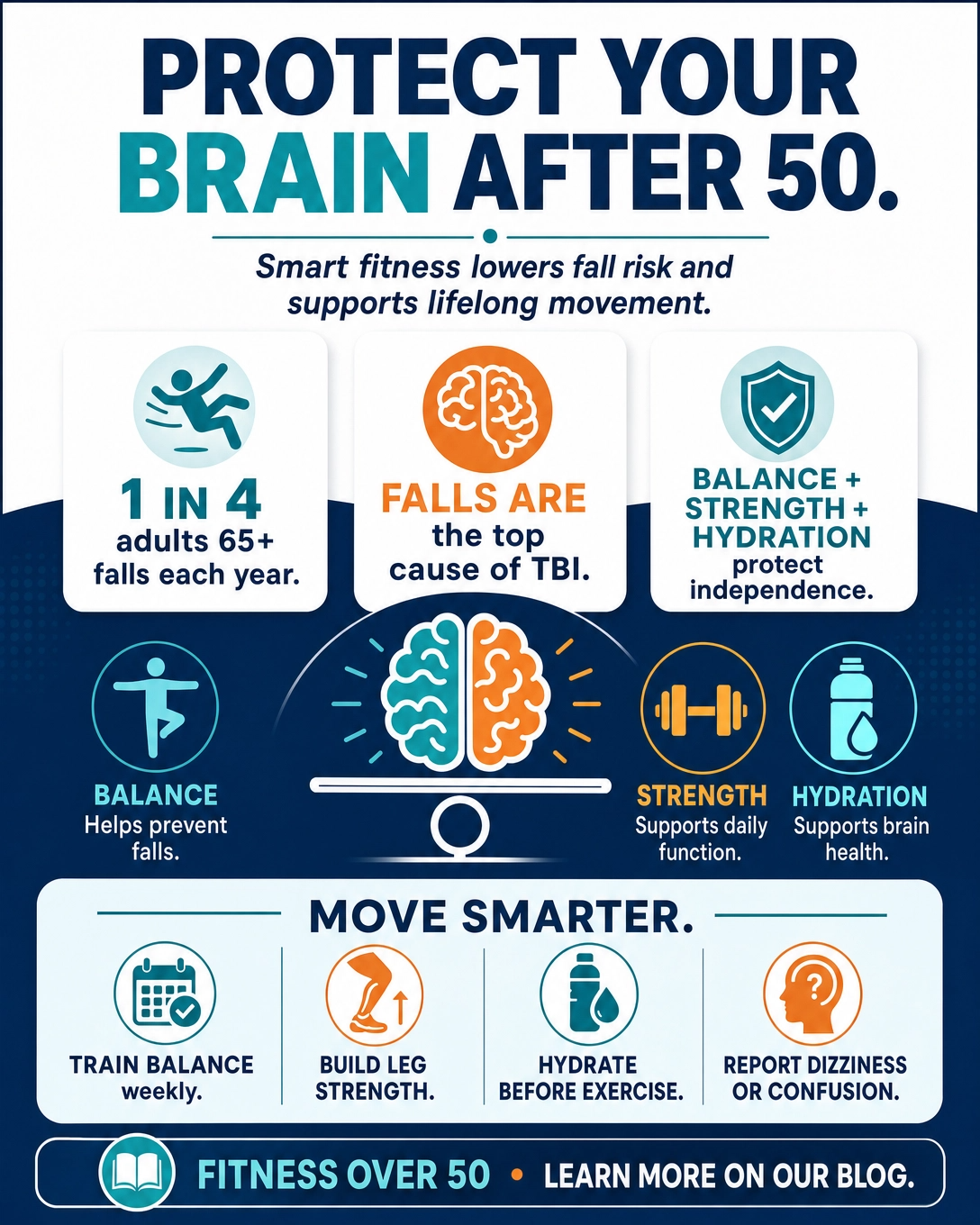
Concussions are not just a sports issue. For adults over 50, concussion awareness is a major part of longevity, fall prevention, brain health, and safe movement. A concussion is a form of traumatic brain injury that can affect thinking, balance, mood, sleep, coordination, and daily confidence. The safest strategy is not to stop moving. The safest strategy is to move smarter by building strength, improving balance, staying hydrated, progressing gradually, and taking symptoms seriously after any fall or head impact.
The central nervous system controls movement, speech, thought, and response time. When the brain is injured, the entire body can be affected. That message is especially important for adults over 50 because balance changes, medication use, dehydration, reduced muscle strength, and slower reaction time can increase both fall risk and recovery challenges.
Why This Matters for Fitness Over 50
For the over 50 fitness market, concussion education should move beyond football, boxing, and contact sports. The larger issue for many older adults is fall related brain injury. The CDC reports that more than one in four adults age 65 and older falls each year, and falling once doubles the chance of falling again. Falls are also the most common cause of traumatic brain injuries, and older adults are more likely than younger people to be hospitalized or die from a traumatic brain injury.
This changes how fitness professionals, wellness coaches, and adults over 50 should think about training. A good fitness plan should not only ask how much weight someone can lift or how many calories they can burn. It should also ask whether that person can step around an obstacle, recover balance, rise from a chair, walk with confidence, hydrate properly, and recognize when dizziness or confusion needs medical attention.
Brain health is part of functional fitness. Balance is part of strength. Reaction time is part of independence. When these areas are trained consistently, adults over 50 can reduce avoidable risks while staying active and confident.
The Connection Between Falls, Concussion, and Independence
A fall can change a person's life quickly. Even when a fall does not cause a fracture, it can cause fear, hesitation, and reduced activity. That reduction in activity can lead to weakness, poorer balance, and even greater fall risk. This is why the best answer is not fear based inactivity. The best answer is safe, progressive movement.
The CDC also notes that traumatic brain injuries in older adults may be missed because symptoms can overlap with other age related concerns, including memory problems, confusion, medication side effects, or changes that families may assume are part of normal aging. That makes it essential for adults, families, and coaches to pay attention after a fall or head impact.
Symptoms that should never be ignored include worsening headache, dizziness, nausea, confusion, unusual sleepiness, balance problems, vision changes, mood changes, or feeling "not right." Anyone taking blood thinners or living with a history of neurological issues should be especially cautious and seek medical advice after a head injury.
What Adults Over 50 Can Do to Protect the Brain
The first step is to treat balance training as a regular part of fitness, not as an afterthought. Supported single leg stands, heel to toe walking near a wall, slow marching, step taps, and controlled direction changes can all help improve body awareness. These movements do not need to be extreme to be effective. They simply need to be practiced consistently.
Strength training is equally important. Stronger legs, hips, core muscles, and postural muscles help the body recover from small slips before they become serious falls. Chair sit to stands, wall pushups, band rows, light carries, hip hinges, and step ups can be excellent starting points when performed with proper form.
Hydration also matters. While hydration needs vary from person to person, adults over 50 should be mindful of drinking fluids before activity, sipping during longer sessions, and adjusting exercise intensity in heat and humidity. Anyone with heart disease, kidney disease, fluid restrictions, or medications that affect hydration should follow professional medical guidance.
Practical Advice if You Are in Pain or Having Trouble Getting Around
If pain, stiffness, fear of falling, or low energy makes exercise feel difficult, start with a small, safe movement plan. Five to ten minutes can count. The CDC states that short bouts of activity can be beneficial, and older adults should be as active as their abilities and conditions allow.
Begin with movements that offer support and control. You might practice standing up from a chair, walking slowly around the house, doing wall pushups, performing ankle circles, or marching in place while holding a counter. If walking outside feels unsafe, start indoors or in a supervised environment. If joint pain is a barrier, water exercise, stationary cycling, and gentle mobility work may be more comfortable.
After a fall or possible concussion, do not rush back into hard workouts. Get medical clearance when symptoms are present. Once cleared, return gradually with light walking, breathing exercises, mobility work, and low intensity strength before progressing to faster movement, balance challenges, or sport activities.
The Message to Remember
Fitness after 50 is not just about looking younger. It is about protecting the brain, preserving independence, and moving with confidence. Concussion awareness belongs in every longevity plan because the brain controls everything the body does.
More from the journal.
Get certified.
Teach kettlebell training, bodyweight exercises and dynamic tension with the BodyBell Method. The certification is approved for continuing education credits by NASM, ACE and AFAA.