The Multitasking Driving Illusion: Why Hands-Free Isn’t Risk-Free
Cognitive science shows the brain can’t safely process a phone conversation and the road at the same time. Here’s what ‘inattention blindness’ really costs you behind the wheel.
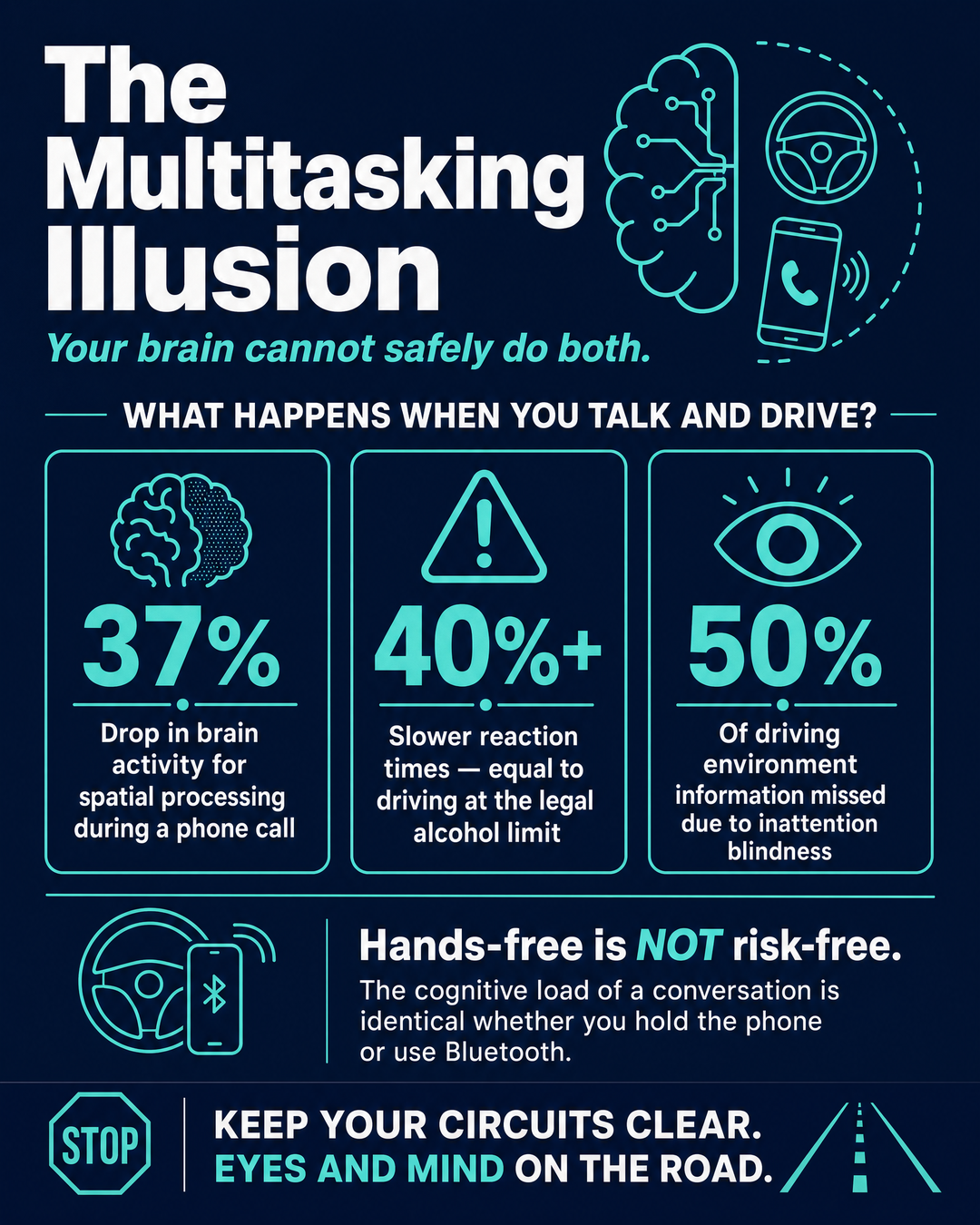
We pride ourselves on multitasking. We juggle projects, coordinate teams, and run our days on the fly. But when that same mindset slides into the driver's seat, the cognitive science is clear: the brain cannot safely process a phone conversation and a dynamic driving environment at the same time.
The Hands-Free Myth
The assumption that hands on the wheel and eyes on the road make cellphone use safe is one of the most persistent myths on the road. The danger isn't where your hands are, it's where your attention is. Whether you hold the phone or pipe a call through Bluetooth, the cognitive load on your brain is essentially identical.
Inattention Blindness
When your working memory is consumed by a conversation, your brain experiences inattention blindness. You can look directly at a red light, a stop sign, or a pedestrian and fail to actually see them. Your eyes register the image; your brain never processes it.
What The Research Shows
- 37% drop in brain activity dedicated to spatial processing during a phone call.
- 40%+ slower reaction times, comparable to driving at the legal blood alcohol limit.
- Up to 50% of the driving environment is missed by drivers engaged in cellphone conversations.
Serial vs. Parallel Processing
Some tasks run in parallel, fast, automatic, low-attention work like walking or tying your shoes. Others are serial, slow, deliberate, attention-hungry tasks like analyzing a problem or reacting to a hazard on the road. Driving feels automatic until conditions change. The instant a pedestrian steps off the curb or a storm hits, driving demands 100% of your serial attention. If your brain is already committed to a call, you're starting that response from behind.
Experience Doesn't Override The Bottleneck
Veteran drivers often believe their years on the road let them safely manage calls behind the wheel. The research disagrees. Practice does not eliminate the human attention bottleneck. When tasks require active decision-making, attention is fundamentally serial, for everyone.
Keep Your Circuits Clear
Driving isn't a mindless routine like brushing your teeth. It is a dynamic task that can demand your absolute, undivided attention in a fraction of a second. The next time your phone rings on the road, let it go to voicemail. Keep your mental circuits clear. Eyes, and mind, on the road.
More from the journal.




Get certified.
Teach kettlebell training, bodyweight exercises and dynamic tension with the BodyBell Method. The certification is approved for continuing education credits by NASM, ACE and AFAA.