The Gut Brain Connection: How Modern Life Is Destroying Our Microbiome
IBS affects up to 1.9 billion people worldwide, and it's no longer seen as just a digestive issue. Here's how antibiotics, processed food, and diet reshape the gut brain axis.
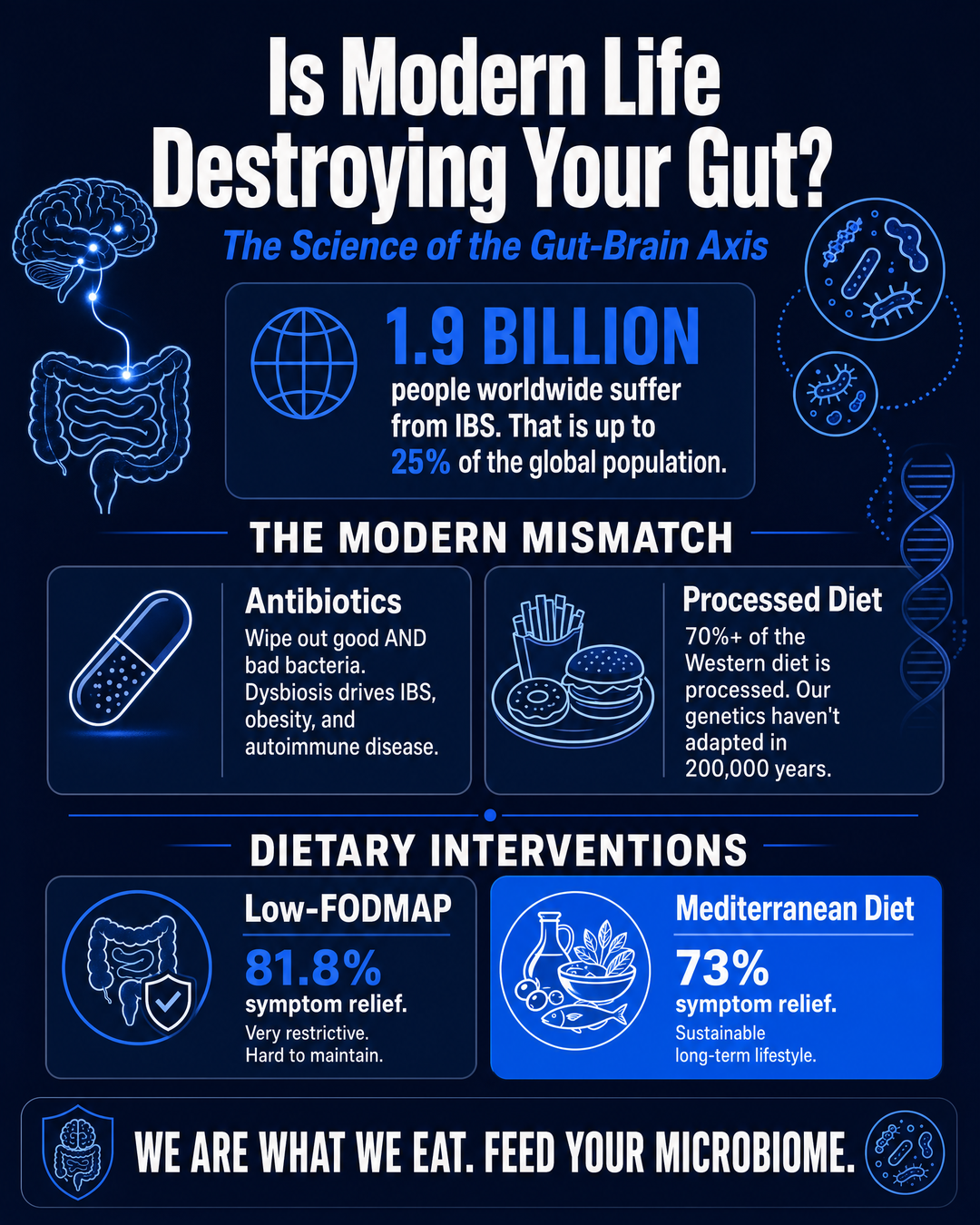
It is one of the most widespread and disruptive health conditions on the planet, yet it is rarely discussed openly. Irritable Bowel Syndrome affects an estimated 10 to 25 percent of the global population. That equates to between 760 million and 1.9 billion people suffering from chronic abdominal pain, gastric distress, and severe disruptions to their daily lives [1].
For decades, modern medicine treated gastrointestinal disorders as highly localized issues. If your stomach hurt, the problem was assumed to be entirely within the stomach. However, modern gastroenterology has radically shifted its perspective. Irritable Bowel Syndrome is no longer viewed simply as a digestive disorder; it is now formally classified as a "disorder of gut brain interaction" [1].
There is a continuous, bidirectional communication network between the central nervous system and the enteric nervous system (the gut). This communication is heavily mediated by an occult organ that we are only just beginning to understand: the gut microbiome [1] [2].
The human gastrointestinal tract is home to over one thousand bacterial species, carrying a genetic footprint more than 150 times larger than the human genome [1]. When this microscopic ecosystem is balanced, it regulates our immune system, produces vital neurotransmitters like serotonin, and keeps us healthy. But when this system is thrown into chaos, the results are catastrophic.
The Modern Mismatch: Antibiotics and Processed Food
Why are functional gastrointestinal disorders so incredibly common in the modern era? The answer lies in a profound evolutionary mismatch. Genetically, the human body has not changed significantly in the last two hundred thousand years. Our digestive tracts evolved to process whole, natural foods in a world teeming with environmental bacteria.
In the last fifty years, we have completely upended that environment.
First, we introduced antibiotics. While antibiotics are unquestionably one of the greatest medical advancements of the twentieth century, saving countless lives from infectious diseases, they come with a severe biological cost. Antibiotics are indiscriminate killers; they wipe out pathogenic bacteria, but they also decimate the beneficial bacteria that make up our microbiome [1]. This disruption of the microbiome, known as dysbiosis, is strongly linked to the development of chronic diseases, including Irritable Bowel Syndrome, obesity, and autoimmune conditions [1]. Furthermore, our obsession with creating sterile, "germ free" environments has lowered the human body's ability to develop a robust, natural immune system [1].
Second, we radically altered our diet. Over 70 percent of the modern Western diet now consists of highly processed cereals, dairy, refined sugars, and vegetable oils [1]. These short chain carbohydrates are poorly absorbed by the human digestive tract. Because our genetics have not adapted to process these artificial food sources, they end up fermenting in the colon, feeding pathogenic bacteria and driving systemic inflammation [1].
We are feeding our bodies a diet they were not designed to process, in an environment stripped of the natural bacteria required to digest it.
Restoring the Ecosystem: Diet and Probiotics
If modern life is destroying our gut microbiome, how do we fix it? Early intervention through dietary modification and microbial supplementation is currently the most effective, evidence based approach to managing Irritable Bowel Syndrome.
For patients suffering from severe gastric distress, the low FODMAP diet has become the gold standard of treatment. FODMAPs (Fermentable Oligosaccharides, Disaccharides, Monosaccharides, and Polyols) are specific types of short chain carbohydrates that are poorly absorbed in the small intestine. They ferment rapidly in the colon, producing gas and triggering severe symptoms. By strictly eliminating these carbohydrates, patients often experience rapid and significant relief [1].
However, the low FODMAP diet is notoriously restrictive and incredibly difficult to maintain long term. Fortunately, recent clinical research has provided a highly viable alternative.
A 2025 pilot randomized controlled trial conducted by researchers at Michigan Medicine compared the highly restrictive low FODMAP diet directly against the much broader Mediterranean diet for patients with Irritable Bowel Syndrome [3]. The results were highly encouraging. While the low FODMAP diet yielded a slightly higher symptom improvement rate (81.8 percent), the Mediterranean diet also provided significant symptom relief, with 73 percent of patients meeting the primary endpoint for abdominal pain reduction [3].
Because the Mediterranean diet focuses on whole foods, lean proteins, and healthy fats without requiring extreme carbohydrate restriction, it represents a much more sustainable long term lifestyle intervention for gut health [3].
Dietary Intervention: Restriction Level: Symptom Relief Rate: Long Term Sustainability: Primary Mechanism
Low FODMAP Diet: Very High: 81.8% [3]: Low (Difficult to maintain): Eliminates highly fermentable short chain carbohydrates
Mediterranean Diet: Moderate: 73.0% [3]: High (Sustainable lifestyle): Reduces processed foods, increases whole foods and healthy fats
In addition to dietary changes, the application of prebiotics and probiotics can help rebuild the decimated microbiome. Prebiotics (like inulin) act as food for beneficial bacteria, while probiotics introduce live, health promoting microorganisms directly into the gut [1]. Together, they facilitate communication between the gut and the brain, resulting in a stronger immune system and a significant reduction in gastric distress [1].
We are what we eat. The gut acts as the central energy processor of the human body, making its optimal operation critical to our overall health. By moving away from highly processed modern diets and actively cultivating our internal ecosystem, we can restore the gut brain connection and reclaim our health.
References
- Harper, A., Naghibi, M. M., & Garcha, D. (2018). The Role of Bacteria, Probiotics and Diet in Irritable Bowel Syndrome. Foods, 7(2), 13. Read study
- Kennedy, P. J., et al. (2014). Irritable bowel syndrome: A microbiome-gut-brain axis disorder? World Journal of Gastroenterology, 20(39), 14105-14125.
- Michigan Medicine. (2025, May 29). Mediterranean diet provides symptom relief for patients with IBS in pilot study. Read article
More from the journal.


Get certified.
Teach kettlebell training, bodyweight exercises and dynamic tension with the BodyBell Method. The certification is approved for continuing education credits by NASM, ACE and AFAA.