Exercise Induced Asthma After 50: How to Breathe Better and Keep Moving Safely
Breathing symptoms during exercise are common, but they don't mean fitness is off limits. Learn how adults over 50 can manage exercise induced bronchoconstriction and stay active safely.
Quick Answer
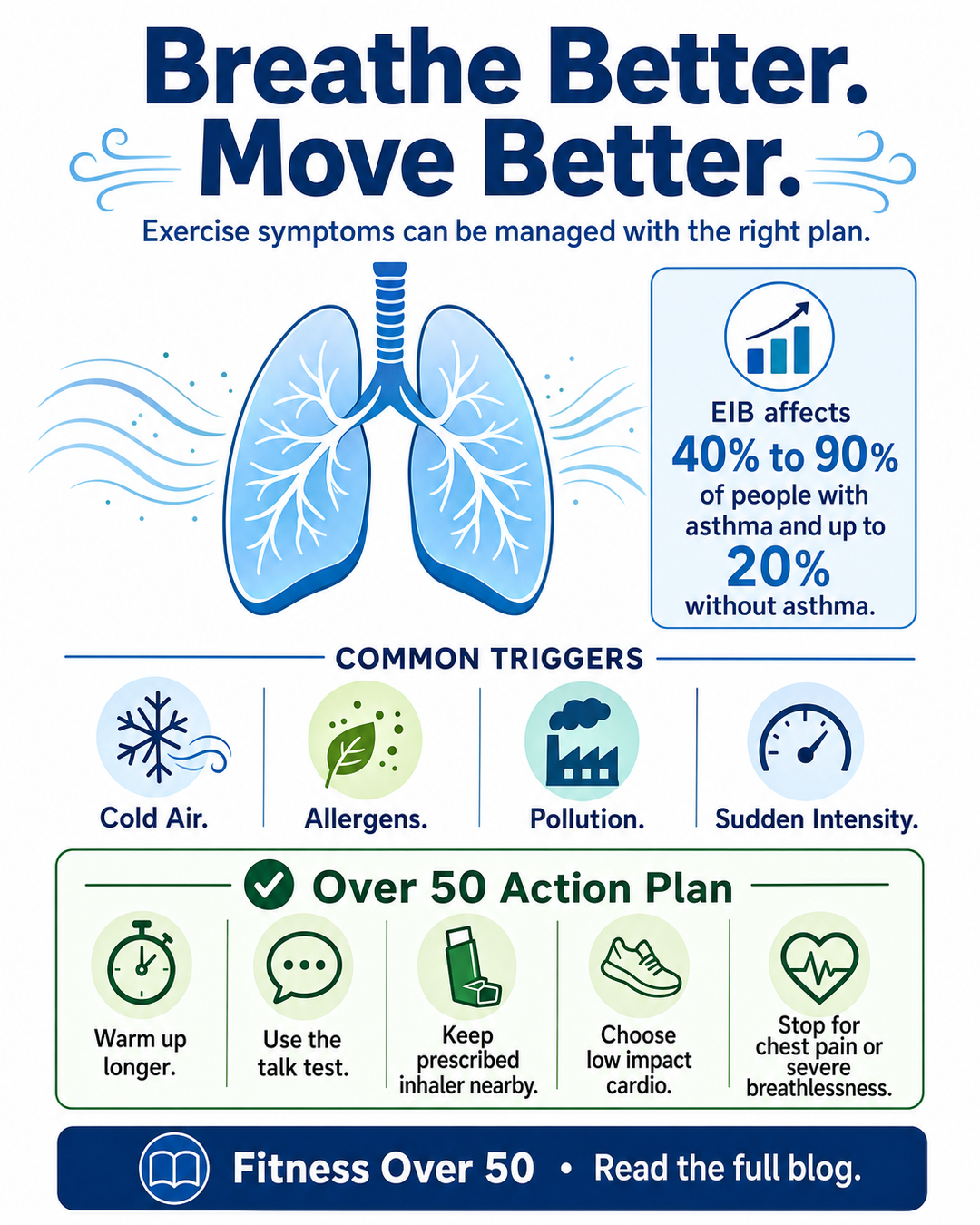
Exercise induced asthma, more accurately called exercise induced bronchoconstriction, is temporary narrowing of the airways during or shortly after physical activity. It can cause coughing, wheezing, chest tightness, mucus, shortness of breath, and fatigue. For adults over 50, the key message is simple: breathing symptoms should be taken seriously, but they do not automatically mean exercise is off limits.
With the right medical evaluation, warm up, pacing, trigger control, breathing strategy, and medication plan when prescribed, many adults can continue exercising safely. The goal is not to push through dangerous symptoms. The goal is to understand the body, reduce triggers, and build fitness in a way that supports long term health.
Intense exercise, dehydration, cold air, hot air, allergens, viral illness, air quality, humidity, and mucus may all contribute to breathing difficulty during activity. Staying calm, using prescribed medication properly, controlling training intensity, and improving breathing habits all matter.
Why This Matters for Adults Over 50
For adults over 50, shortness of breath can have more than one cause. It may be related to asthma, exercise induced bronchoconstriction, allergies, deconditioning, anxiety, reflux, medication side effects, heart disease, or a combination of factors. That is why recurring chest tightness, wheezing, or unusual breathlessness should be evaluated by a qualified medical professional.
Current medical literature reports that exercise induced bronchoconstriction occurs in 40% to 90% of people with asthma and up to 20% of people without a formal asthma diagnosis. A major review found that prevalence in the general population is approximately 5% to 20%, and it noted that exercise induced bronchoconstriction can reduce exercise participation and quality of life.
This matters because avoiding exercise can create a cycle that makes daily life harder. When people stop moving, they may lose strength, endurance, balance, and confidence. Over time, stairs feel harder, walking feels more tiring, and normal daily activities can become more stressful. The solution is not reckless intensity. The solution is a smarter, safer movement plan.
Exercise May Still Be Part of the Solution
It may seem surprising, but properly managed exercise can help many people with exercise induced breathing symptoms. Research summarized in StatPearls notes that regular exercise can reduce the severity of exercise induced bronchoconstriction, improve lung function, and decrease airway inflammation when symptoms are managed appropriately.
This does not mean every person should train the same way. Adults over 50 should pay close attention to their individual triggers. Cold dry air, high pollen, wildfire smoke, pollution, respiratory infections, and sudden high intensity effort can all make symptoms worse. A longer warm up, lower starting intensity, indoor training on poor air quality days, and a gradual progression can make exercise more manageable.
The talk test is one of the simplest tools. During moderate activity, you should generally be able to speak in short sentences. If you cannot talk because you are gasping, the intensity may be too high for that moment. Slowing down is not failure. It is intelligent training.
Practical Advice if Breathing Limits Your Movement
If you are over 50 and breathing symptoms make exercise intimidating, begin with short sessions. Five to ten minutes of easy walking, stationary cycling, water walking, or chair based movement can be a strong starting point. Build duration before intensity. A longer warm up may help the lungs adjust before more demanding movement.
If you have a prescribed rescue inhaler or controller medication, follow your clinician's instructions. Keep prescribed medication available during activity when advised. Do not borrow someone else's inhaler, and do not ignore symptoms that are new, severe, or worsening.
Stop exercise and seek urgent help if you have chest pain, faintness, blue lips, severe breathlessness, confusion, or symptoms that do not improve with your prescribed plan. Adults over 50 should be especially cautious with chest tightness because heart related symptoms can sometimes feel like breathing problems.
Joint Friendly Options for Adults With Pain or Limited Mobility
Many people over 50 are dealing with more than one challenge. Breathing may be one issue, while knee pain, hip stiffness, back pain, arthritis, or balance concerns may also be present. Low impact exercise can help you build endurance without pounding the joints.
Good options may include water aerobics, recumbent biking, gentle rowing, slow treadmill walking, resistance bands, chair strength circuits, and light dumbbell training. The CDC notes that adults with chronic conditions or disabilities can still gain important benefits from physical activity, including better independence, sleep, weight control, mental health, cardiovascular health, muscle fitness, and brain health.
If arthritis is part of the picture, movement can still be helpful. The CDC states that physical activity can help people with arthritis reduce joint pain and improve function and mood. The key is choosing exercises that are tolerable, starting slowly, and increasing difficulty in small steps.
A Simple Starting Plan
Begin with a warm up that feels almost too easy. Walk slowly, move the arms, perform gentle shoulder rolls, practice nasal breathing if comfortable, and allow the body to settle into the session. Then move into low intensity cardio or strength work at a pace where breathing remains controlled.
A reasonable beginner session might include five minutes of easy movement, five to ten minutes of low impact cardio, a few simple strength exercises, and a calm cool down. Over time, increase the session by a few minutes when symptoms are well controlled. The goal is consistency, not exhaustion.
The Message to Remember
Shortness of breath can be scary, but it does not have to end your fitness journey. If exercise makes you cough, wheeze, or feel tight in the chest, get evaluated, understand your triggers, follow your medical plan, and train at a pace your body can handle.
Fitness after 50 should meet you where you are. With the right approach, you can breathe better, move better, and rebuild confidence one session at a time.
More from the journal.

Get certified.
Teach kettlebell training, bodyweight exercises and dynamic tension with the BodyBell Method. The certification is approved for continuing education credits by NASM, ACE and AFAA.