The Biological Autopilot: How Distraction Sabotages Your Physical Training
Modern gyms are built around distraction, screens, scrolling, and side tasks. The neurobiology of movement says that trade-off costs you intensity, balance, and safety.
Walk into any modern commercial fitness center, and you will find a sea of screens. Rows of treadmills and stationary bicycles are equipped with high-definition televisions, internet browsers, and virtual reality displays. Gym-goers scroll through social media on their cellphones, watch television dramas, or read digital magazines while putting in their miles. We have built an entire fitness culture around distraction, treating exercise as a mindless chore that must be tolerated through entertainment.
This desire to escape the physical reality of a workout is highly understandable, but it raises a fundamental scientific question. Is this distracted approach the most effective way to pursue physical fitness? When we look at the neurobiology of movement, the answer is a resounding no. By letting our minds wander during exercise, we are actively sabotaging our physical gains and placing ourselves at serious risk of acute injury.
The Biological Autopilot: Central Pattern Generators
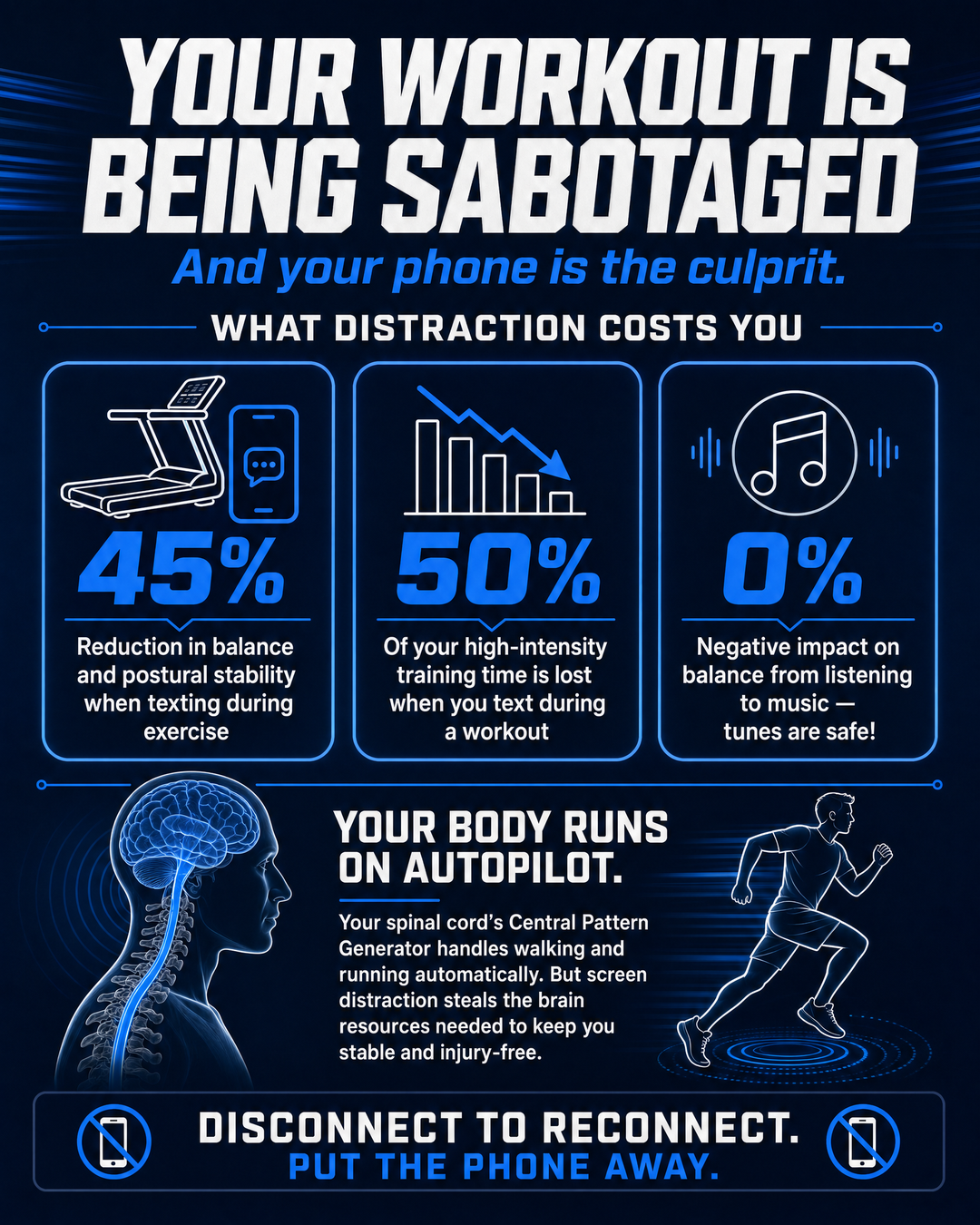
To understand why distracted exercise is so problematic, we must first examine how the human body coordinates repetitive movement. Our nervous system has evolved an incredibly efficient biological autopilot system known as the Central Pattern Generator (CPG). CPGs are specialized networks of interneurons located within the spinal cord, capable of producing rhythmic, repetitive, and highly coordinated motor patterns, such as walking, running, or cycling, without requiring active, conscious input from the higher centers of the brain.
The CPG operates at an unconscious level, allowing the spinal cord to coordinate the alternating contraction and relaxation of opposing muscle groups. When one leg lifts up to swing forward, the CPG automatically stabilizes the opposite leg on the ground. This spinal autonomy is highly adaptive. If every single breath, heartbeat, and step required conscious thought, our brains would be completely overwhelmed.
Because of the CPG, a trained athlete does not have to actively think about the physical mechanics of running. A wide receiver running downfield can sprint at maximum speed on autopilot, freeing up their conscious mind to focus on the highly complex, dynamic task of tracking and catching a deep pass.
Cross-Sport Transfer: Generalized Motor Programs
While the CPG handles basic, rhythmic locomotion, more complex athletic movements are governed by Generalized Motor Programs (GMPs). A GMP is an abstract mental blueprint of a movement class stored in long-term memory. Once a GMP is established through practice, it can be adapted to different situations on the fly by adjusting parameters like speed, force, and direction.
One of the most fascinating aspects of motor learning is how a well-developed GMP in one sport can transfer directly to another. A classic example is the profound transfer of skills between wrestling and football, particularly for interior linemen. Wrestling teaches an athlete how to manipulate body weight, maintain balance, and exploit an opponent's center of gravity. When a wrestler transitions to the football field as a defensive tackle, they do not have to consciously think about their stance or hand placement, those movements have been automated through a shared GMP.
This automaticity allows the lineman to hand fight and shift leverage instinctively, freeing up their conscious mental capacity to focus entirely on tracking the quarterback's movements or reading the offensive play.
The True Cost Of Distracted Exercise
Given that our biological autopilot is so effective at managing repetitive movement, it is easy to see why the general public assumes they can safely watch television or text while exercising on an elliptical or stationary bike. If the spinal cord is handling the movement, why not entertain the brain?
The flaw in this logic lies in the difference between mindless movement and active physical adaptation. Serious athletes do not distract themselves during training because they understand that physical performance and motor learning require active cognitive engagement. When you introduce high-attention secondary distractions, you pay a steep price in both workout quality and physical safety.
1. The Sabotage Of Workout Intensity
When you use a cellphone to text or browse during a workout, you are not actually multitasking. Instead, your brain is rapidly switching its attention back and forth between the screen and your physical movement. This constant task-switching actively deconditions your effort.
A study published in Computers in Human Behavior monitored individuals during a twenty-minute treadmill workout. The texting group spent nearly half of their workout, almost ten minutes, languishing in a low-intensity zone, and managed only seven minutes of high-intensity effort. The undistracted group spent only three minutes in low intensity, devoting nearly thirteen minutes to high-intensity training. By focusing on the screen, the distracted exercisers significantly reduced the cardiovascular benefits of their workout.
2. The Balance And Stability Deficit
The most alarming consequence of distracted exercise is the immediate degradation of balance and postural stability. While walking on stationary ground is highly automated, walking or running on a moving treadmill belt is a much more demanding task that requires constant, micro-adjustments of balance.
A study from Bloomsburg University found that texting during exercise impairs postural stability and balance by a massive 45%. Even simply talking on the phone reduces balance by 19%. A split-second distraction on a moving treadmill belt can easily lead to a misstep, resulting in severe ankle sprains, knee ligament tears, or dangerous falls.
Distraction vs. Enhancement: The Role Of Music
It is important to note that not all auditory stimuli are detrimental to exercise. The Bloomsburg University study also evaluated whether listening to music on a cellphone impacted postural stability. The researchers found that listening to music had no negative impact on balance or coordination. In fact, previous research has consistently shown that a well-chosen playlist can actually boost workout intensity, increase enjoyment, and help synchronize rhythmic movement.
The critical difference lies in the cognitive demand. Listening to music is a passive, auditory experience that does not require active, serial cognitive processing. Texting, reading, or watching a complex television show, however, demands active visual and mental attention, which immediately hijacks the brain resources needed to maintain physical stability and movement quality.
Disconnect To Reconnect
The modern fitness center has made it easier than ever to escape the physical discomfort of exercise. But by turning our workouts into mindless, distracted routines, we are breaking the vital connection between the mind and the body, sacrificing intensity, reducing cardiovascular gains, and exposing ourselves to preventable injury. The next time you step on a treadmill, put the phone down, cue up the music, and let your training have your full attention.
More from the journal.


Get certified.
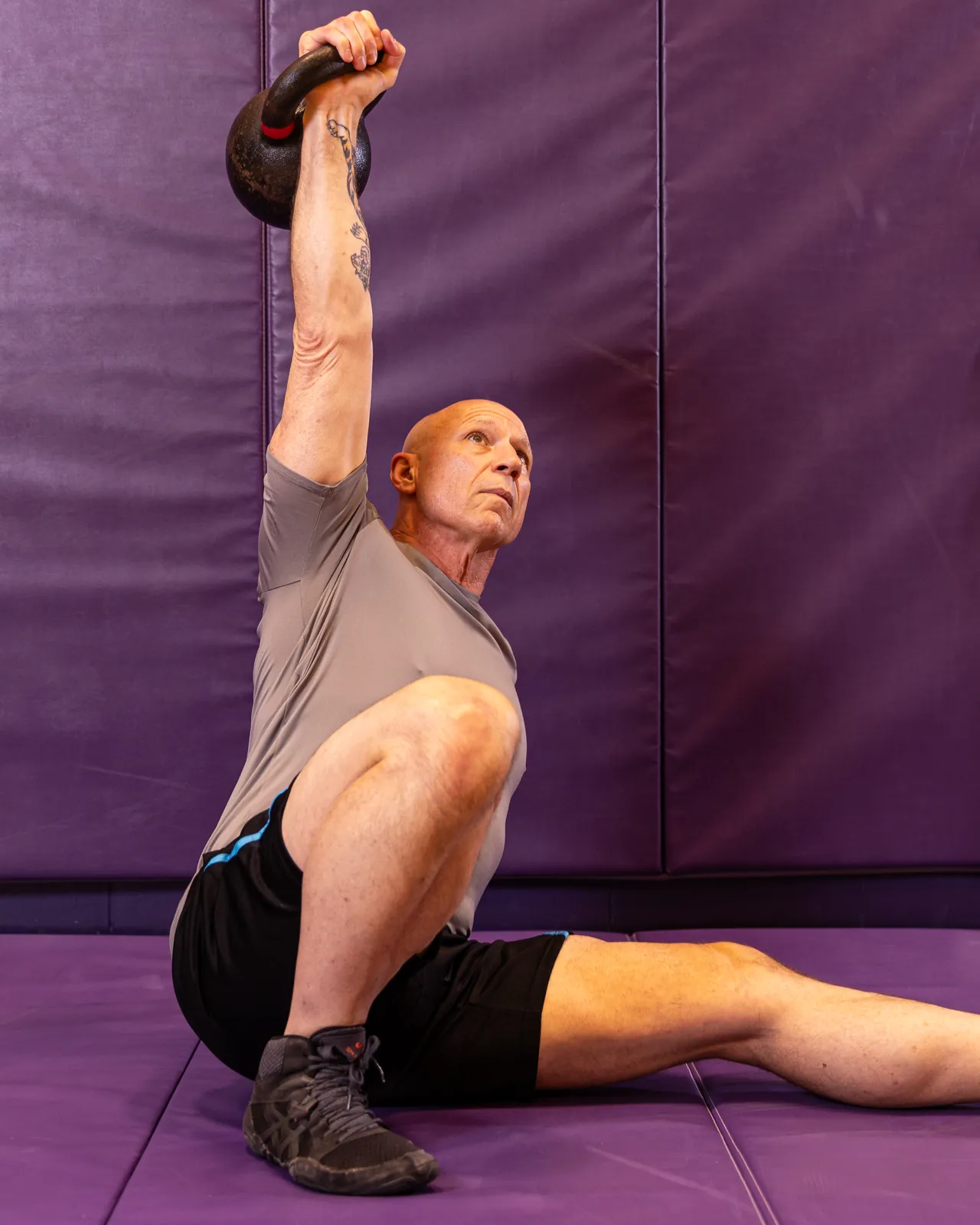
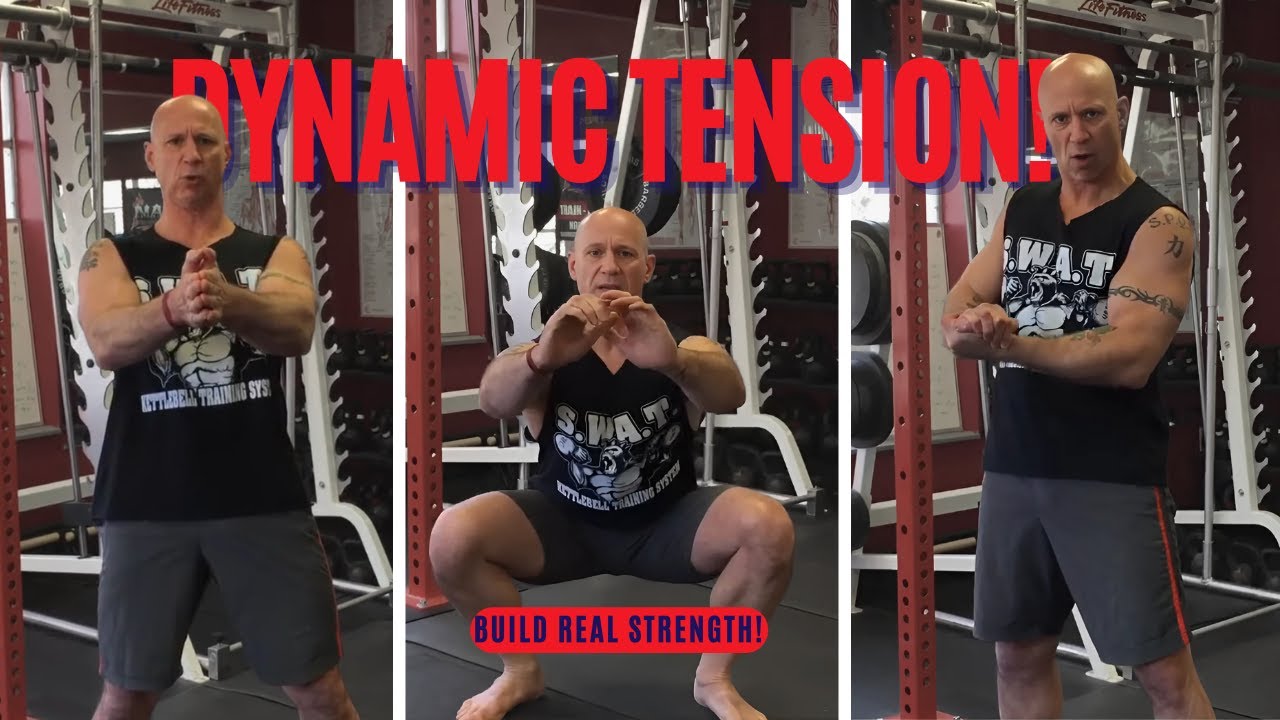
Teach kettlebell training, bodyweight exercises and dynamic tension with the BodyBell Method. The certification is approved for continuing education credits by NASM, ACE and AFAA.