Why Your Heart Rate Climbs at the Same Pace: Cardiovascular Drift After 50
Your pace is steady, your breathing is controlled, yet your heart rate keeps climbing. That's cardiovascular drift. Learn why it happens and how to train smarter in heat, especially after 50.
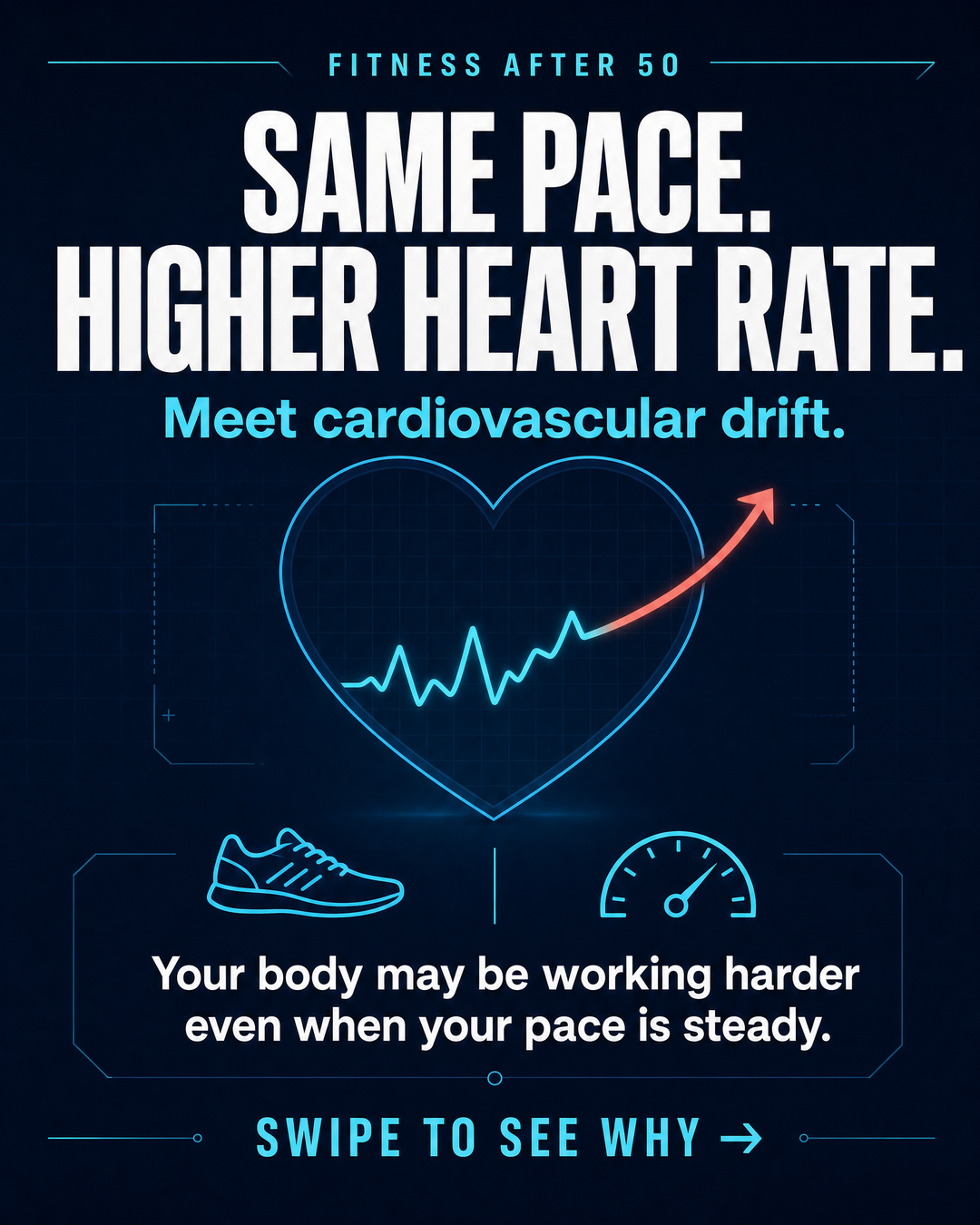
You are on your usual walk, ride, or treadmill session. The pace is steady. The incline has not changed. Your breathing feels controlled. Yet your watch shows that your heart rate is gradually moving higher.
That pattern has a name: cardiovascular drift. It is a normal exercise physiology response that can become more noticeable during longer workouts, warmer weather, or days when you begin underhydrated. For active adults over 50, recognizing the pattern can help you make a smart adjustment before a good workout turns into an unnecessarily hard one.
What Cardiovascular Drift Actually Is
Your heart rate and stroke volume work together to support cardiac output, which is the amount of blood your heart pumps each minute. During sustained exercise, stroke volume can gradually decline. To help maintain cardiac output, heart rate rises, even when the external workload stays the same.
Think of stroke volume as the amount of blood delivered with each beat. If a little less blood is pumped with each beat, the heart may beat faster to keep circulation moving. The result is a heart rate that drifts upward despite a familiar walking speed, bike resistance, or jogging pace.
This is not automatically a sign that something is wrong. It is useful body feedback. It tells you that your cardiovascular system is working harder to manage the combined demands of exercise, heat, and fluid balance.
Why Heat and Sweat Make the Pattern Stronger
Sweat is essential because it helps cool the body. But sweat also removes fluid. As fluid losses accumulate, blood volume can be reduced and core temperature can rise. Those changes make it harder to preserve stroke volume during a long session.
A landmark controlled study had trained cyclists exercise for two hours in warm conditions while replacing different amounts of sweat loss. Greater dehydration tracked closely with a larger rise in core temperature and heart rate, along with a greater decline in stroke volume. Participants who replaced more fluid finished with roughly 1.1 percent body mass loss, while the group receiving no fluid lost about 4.2 percent.
For real world exercisers, this does not mean that everyone needs an identical drinking schedule. Sweat rate, exercise duration, weather, medications, and health history all matter. It does mean that starting well hydrated, choosing a cooler setting when possible, and noticing your heart rate trend can make long sessions feel more manageable.
The American College of Sports Medicine notes that many people exercising for less than 60 to 90 minutes in normal conditions do not need special electrolyte products. The need for a more deliberate fluid plan rises with longer exercise, heavy sweating, and heat exposure. ACSM also notes that sweat losses vary widely, which is why a one size fits all plan is not the goal.
The Over 50 Difference: Train by Today's Signals
As we get older, the best training plan is not about proving that we can force our way through every workout exactly as written. It is about matching effort to the body we brought with us that day.
A heart rate that keeps climbing at the same pace can be a cue to shorten the session, ease the intensity, move indoors, take a shaded break, or switch to a gentler option. That choice is not backing down. It is intelligent self coaching.
For someone managing knee pain, hip stiffness, arthritis, balance concerns, or a flare of low back discomfort, cooling down the environment can also make movement easier to tolerate. Try a climate controlled walk, a recumbent bike, a pool session, chair based conditioning, or light resistance work in place of a hot outdoor workout. Consistent, comfortable training almost always beats the occasional heroic session followed by several inactive days.
Federal physical activity guidance encourages older adults to judge intensity relative to their own fitness, include balance training alongside aerobic and strength work, and stay as active as their abilities and conditions allow. If you have a chronic condition, disability, or symptoms that affect exercise tolerance, a clinician or qualified exercise professional can help you choose the right starting point.
Your Simple Cardiovascular Drift Game Plan
First, use your watch as information, not a verdict. A rising heart rate during a steady effort is a reason to check in with yourself. Ask whether the day is hot, whether you have been sweating heavily, whether your pace has quietly crept up, and whether fatigue is changing your form.
Second, lower the demand early. Ease your pace, reduce the incline, choose a flatter route, extend your rest interval, or bring the session indoors. On a hot and humid day, the goal can shift from performance to safe, steady movement.
Third, arrive with a sensible hydration habit. Drink regularly with meals and through the day. For longer or hotter sessions, carry fluid and practice what feels comfortable during training rather than waiting until an event or demanding workout. If you sweat heavily, speak with a qualified professional about whether sodium or electrolyte replacement makes sense for your situation.
Fourth, respect medication and medical factors. The Centers for Disease Control and Prevention explains that heat can interact with commonly used medicines, including certain diuretics, blood pressure drugs, beta blockers, medicines that affect sweating, and some pain relievers. These interactions can contribute to dehydration, reduced cooling, low blood pressure, electrolyte problems, fainting, and falls. Never stop or adjust medication on your own. Ask your prescriber or pharmacist for a personalized hot weather plan.
Finally, know the stop signs. Stop exercising and cool down if you feel dizzy, faint, confused, unusually weak, nauseated, develop a headache that is worsening, or feel chest discomfort. Seek urgent medical care for concerning or severe symptoms. The workout can wait. Your health cannot.
The Bottom Line
Cardiovascular drift is the body's way of telling you that the same workload is becoming more demanding. A higher heart rate at the same pace may reflect a combination of time, temperature, sweat loss, and lower stroke volume. The response is often predictable, and your next move can be simple: slow down, cool down, hydrate sensibly, and choose the session that fits the conditions.
Fitness after 50 is not about ignoring the signals. It is about learning to read them well enough to stay active for decades. For practical coaching that helps you build strength, mobility, and long term confidence wherever you live, visit our website and connect with us.
Original Article Reference
This refreshed post is based on the original article, "Cardiovascular Drift," Philip Ross, April 26, 2017.
References
1. Coyle (1998), Cardiovascular drift during prolonged exercise and the effects of dehydration
2. Montain and Coyle (1992), Influence of graded dehydration on hyperthermia and cardiovascular drift during exercise
3. American College of Sports Medicine, 9 Facts About Hydration and Electrolytes
More from the journal.
Get certified.
Teach kettlebell training, bodyweight exercises and dynamic tension with the BodyBell Method. The certification is approved for continuing education credits by NASM, ACE and AFAA.