Is It Too Late to Build Muscle After 50? What Science Says
No. Adults in their 50s, 70s, even 90s gain real strength with resistance training. Master Phil Ross explains how aging changes muscle, balance and speed.
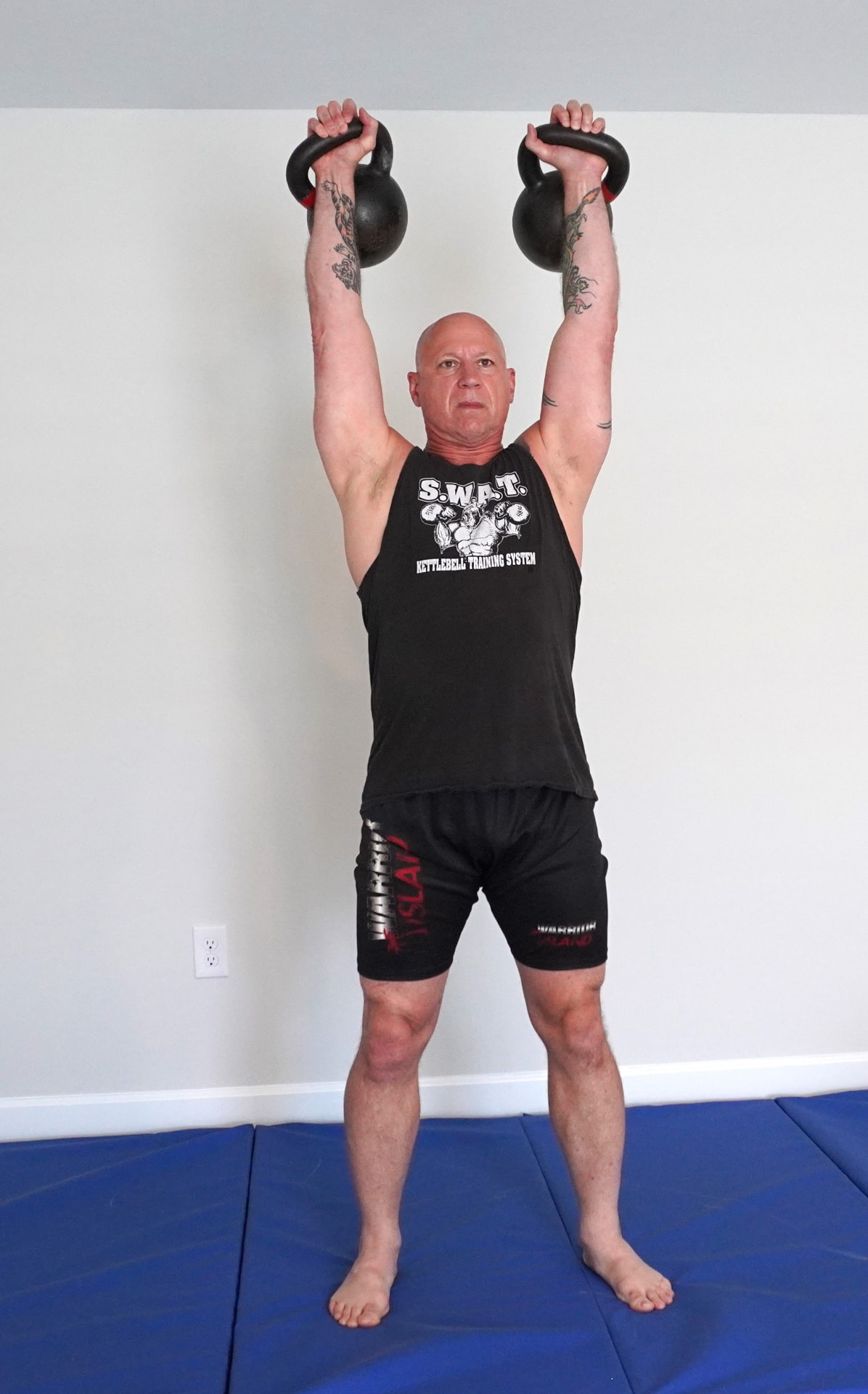
No, it is not too late. Adults in their 50s, 60s, 70s, and even their 90s can build real strength and muscle with regular resistance training, and the payoff shows up in balance, reaction time, and independence.
Aging does change how your body moves. But most of the decline people blame on birthdays is really the result of doing less. Here is what actually happens, and what you can do about it starting this week.
How fast do you lose muscle as you age?
Muscle loss with age has a name: sarcopenia. It starts quietly in your 30s and picks up speed after 50.
The numbers vary from study to study, but research reviews (Mitchell et al., 2012) put it roughly like this:
- Muscle mass drops by about 1% a year after middle age, often a little less.
- Strength drops faster, about 1.5% to 3% a year in older adults. In some studies it falls two to five times faster than muscle size.
- Power, the ability to move quickly and forcefully, goes first. It can start sliding by your 40s.
That last point matters most. Power is what catches you when you trip. It is what gets you up off the floor or up a flight of stairs without grabbing the rail.
Why do we lose strength with age?
There is no single cause. The usual suspects are:
- Lower hormone levels, especially testosterone and growth hormone, which help build and repair muscle.
- Less activity. Most people simply move and lift less every decade.
- Lost confidence. After a fall or an injury, many people start avoiding anything that feels risky, and their strength drops even faster.
- Mood. Depression is more common later in life and saps the motivation to stay active.
- Illness and injury, which can sideline you for weeks and make it hard to restart.
Notice how many of those are things you can influence. Activity, confidence, and mood all respond to training.
Can you build muscle after 50, 60, or even 90?
Yes, and the evidence is strong.
One famous study from Tufts University put frail nursing-home residents, average age 90, on an 8-week strength program. Their leg strength rose an average of 174%. Their thigh muscles grew, and their walking speed improved by nearly half (Fiatarone et al., JAMA, 1990).
Healthy adults without major injury or disease typically see measurable gains in muscle and strength within about 10 weeks of consistent resistance training.
Is it harder to add muscle after 60? A little. You may progress more slowly and need more recovery. But "slower" is not "impossible," and every gain counts.
Does reaction time slow down with age?
Some, yes. The long-running Baltimore Longitudinal Study of Aging found that reaction time slows gradually over the decades. The biggest slowdown is not in simple reactions, like hitting a button when a light comes on. It is in choice reactions, where you have to decide which way to move before you move (Fozard et al., 1994).
Part of what looks like slowing is also caution. Older adults often trade a little speed for a little more certainty. That is not always a bad trade.
The good news: active people tend to keep faster reactions than inactive people their age. Practicing skills that make you react, decide, and move is training for your nervous system, not just your muscles.
Why does balance matter so much after 50?
Because falls are the biggest physical threat most older adults face.
According to the CDC, more than 1 in 4 adults 65 and older fall each year, and falls are the leading cause of injury and injury-related death in that age group. The fall death rate rose 21% between 2018 and 2024.
Balance depends on three things working together:
- Strength to hold your posture and catch yourself.
- Body awareness, your nervous system's sense of where you are in space.
- Reaction time to respond when the ground shifts.
Exercise improves all three. A major Cochrane review of 59 studies found exercise programs cut the rate of falls in older adults by 23%. Programs that combined balance work with strength training did even better, about 34%. Tai chi alone reduced falls by about 19% (Sherrington et al., 2019).
What is the best exercise for older adults?
The best plan mixes three things:
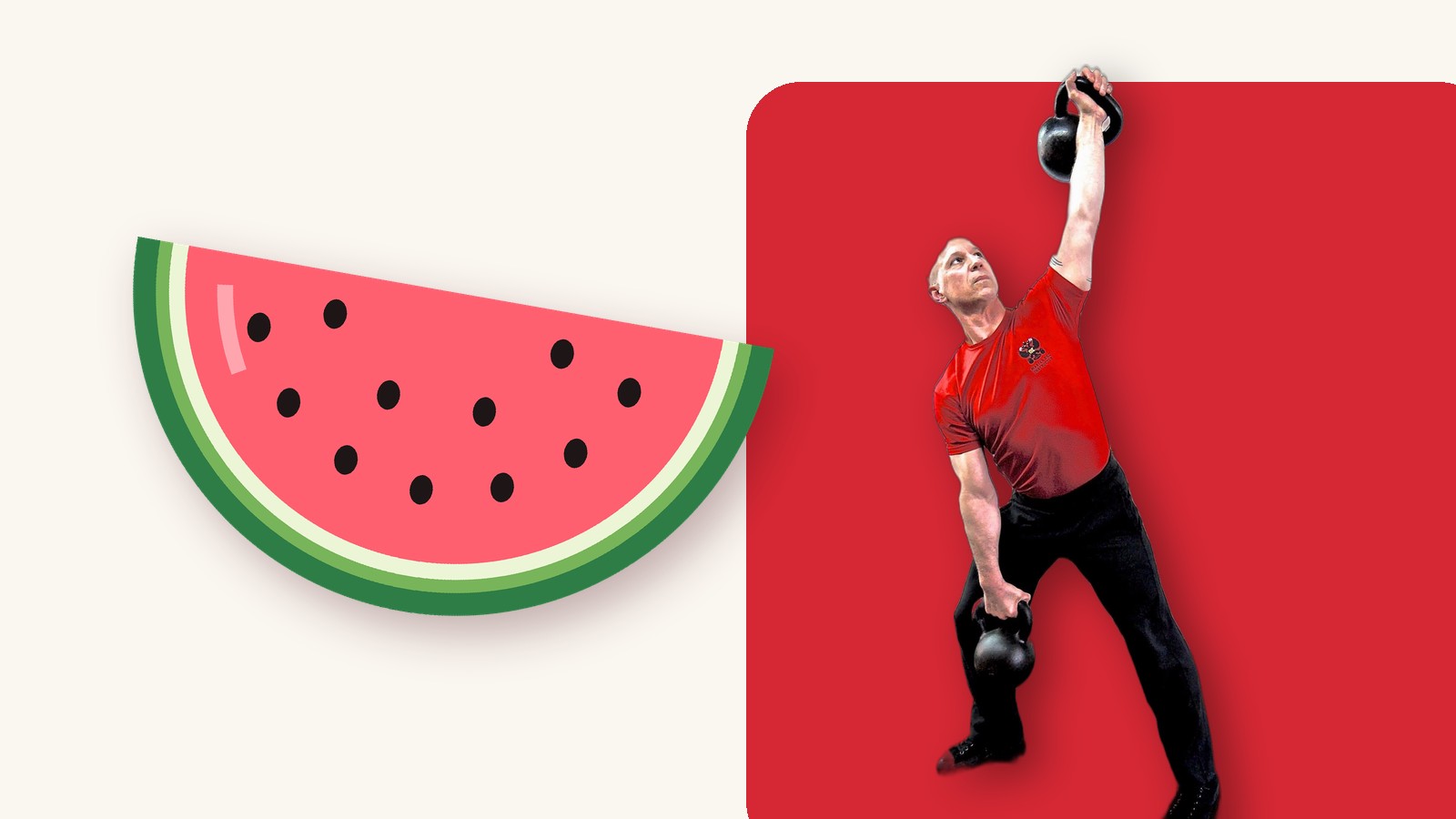
- Strength training, at least 2 days a week. Kettlebells are one of my favorite tools for this because one bell trains strength, grip, balance, and power in the same movement. Goblet squats, deadlifts, rows, and presses cover most of what you need.
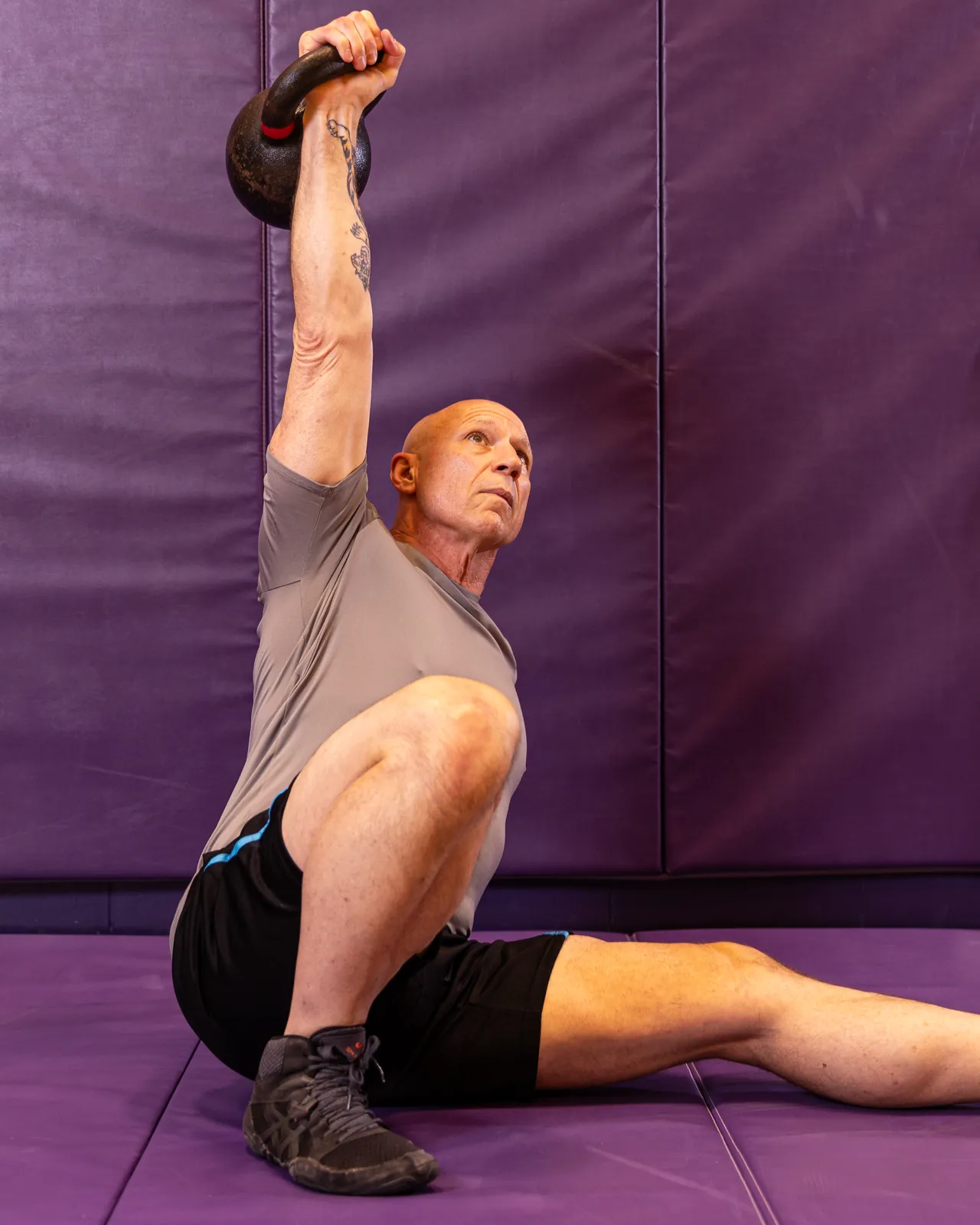
- Balance and body-awareness work. Tai chi, yoga, Turkish get-ups, single-leg stands near a counter, and slow controlled lunges all teach your body where it is in space. Yoga and tai chi also help with circulation, flexibility, mood, and focus.
- Something that challenges your brain. Learn a martial art, a new sport, a dance, a musical instrument, or a second language. Learning new skills keeps your coordination and your mind sharp.
The CDC recommends that adults 65 and older get 150 minutes a week of moderate activity, plus strength work 2 days a week and balance activities. Start well below that if you need to. Consistency beats intensity.
How do I start strength training safely after 50?
- Check in with your doctor if you have heart disease, uncontrolled blood pressure, a recent injury, or any condition that limits activity.
- Learn the movement before you load it. Good coaching early on prevents most injuries.
- Start lighter than you think. Finish each session feeling like you could have done a little more.
- Progress slowly. Add a few reps or a little weight every week or two.
- Recover on purpose. Sleep, protein, and rest days are where the strength actually gets built.
The bottom line
Aging changes your muscles, your balance, and your reaction time. Quitting changes them a lot more.
Here is the best advice I can give you after 50 years in martial arts and coaching everyone from pee-wees to pros: if you want to keep doing something, keep doing it. The people who stay strong, steady, and quick at 70 are the ones who never stopped training at 50.
If you want a proven place to start, the Body Bell Method is built for exactly this: kettlebell strength, balance, and mobility training you can do at any age, coached step by step. Visit bodybellmethod.com to learn more, and share this with someone who thinks they are "too old to start."
References
- Centers for Disease Control and Prevention. Older Adult Falls Data (updated Feb 2026). https://www.cdc.gov/falls/data-research/index.html
- Centers for Disease Control and Prevention. Older Adult Activity: An Overview. https://www.cdc.gov/physical-activity-basics/guidelines/older-adults.html
- Fiatarone, M. A., et al. (1990). High-intensity strength training in nonagenarians: Effects on skeletal muscle. JAMA, 263(22), 3029-3034.
- Fozard, J. L., Vercruyssen, M., Reynolds, S. L., Hancock, P. A., et al. (1994). Age differences and changes in reaction time: The Baltimore Longitudinal Study of Aging. Journal of Gerontology: Psychological Sciences, 49(4), P179, P189.
- Mitchell, W. K., et al. (2012). Sarcopenia, dynapenia, and the impact of advancing age on human skeletal muscle size and strength: A quantitative review. Frontiers in Physiology, 3, 260.
- Sherrington, C., et al. (2019). Exercise for preventing falls in older people living in the community. Cochrane Database of Systematic Reviews, CD012424.
- Schmidt, R. A., & Lee, T. D. (2011). Motor Control and Learning: A Behavioral Emphasis (5th ed.). Human Kinetics.
- American Council on Exercise (2014). ACE Personal Trainer Manual (5th ed.).
Adapted from Phil Ross's graduate coursework in motor learning (2017), updated with current research for 2026.
More from the journal.
Get certified.
Teach kettlebell training, bodyweight exercises and dynamic tension with the BodyBell Method. The certification is approved for continuing education credits by NASM, ACE and AFAA.